
The Rise of UGC Esports: Transforming the Gaming Community
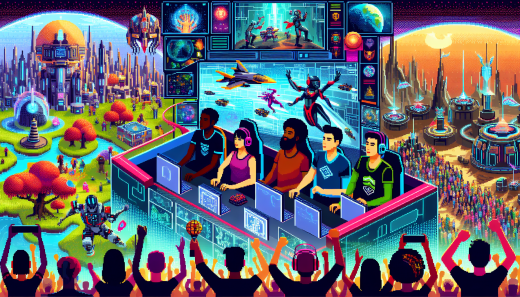
The Rise of UGC Esports: Transforming the Gaming Community
Understanding UGC Esports: What It Is and Why It Matters
The gaming community has witnessed a revolutionary shift with the emergence of UGC Esports, a phenomenon that leverages user-generated content to redefine competitive gaming. UGC Esports encompasses a wide array of activities where players themselves create and share content, from tournament organization to in-game modifications. This grassroots movement is reshaping the gaming landscape by democratizing the creation and participation of esports events, allowing a wider range of players to engage and showcase their talents.
UGC Esports stands out not just for its innovative approach but also for its pivotal role in fostering player creativity and engagement. By enabling players to craft their own content and competitions, it cultivates a sense of ownership and empowerment within the community. This dynamic has the potential to drive significant growth and evolution in the world of competitive gaming, highlighting the importance of UGC Esports in today’s digital age.
Understanding UGC Esports: What It Is and Why It Matters
Definition and Scope of UGC Esports
In the rapidly evolving gaming landscape, UGC Esports—short for User-Generated Content Esports—is emerging as a transformative phenomenon. But what exactly is UGC Esports? At its core, UGC Esports encompasses competitive gaming events and communities centered around content created by the users themselves, rather than by professional game developers or tournament organizers. This includes custom maps, game mods, user-crafted challenges, community-driven tournaments, and more.
The scope of UGC Esports is broad, encompassing a range of genres and platforms. From first-person shooters to real-time strategy games, UGC Esports leverages the creativity and ingenuity of the gaming community to create unique and engaging competitive experiences. The essence of UGC Esports lies in the democratization of content creation and competition, offering players not only the opportunity to participate in games but also to shape them in meaningful ways.
How User-Generated Content Is Shaping the Gaming Landscape
One of the most significant impacts of UGC Esports is its ability to reshape the gaming landscape. Traditionally, game developers and publishers had tight control over the content and structure of competitive gaming. However, the advent of user-generated content has shifted this dynamic. Players now have the tools and platforms to create their own content, which can then be incorporated into competitive play.
This evolution has led to an explosion of creativity and diversity within the gaming community. User-generated content has given rise to novel game modes, maps, and even entirely new genres that might never have emerged through traditional development channels. For instance, titles like Fortnite and Minecraft have thrived because of their UGC communities, offering players almost limitless creative freedom to design new content that can be shared and competitively played.
By empowering players to contribute directly to the gaming ecosystem, UGC Esports has also led to a more engaged and invested community. Gamers who create and share content feel a deeper connection to the games they love and are more likely to remain active participants in the community.
The Significance of UGC Esports in Fostering Player Creativity and Engagement
One of the primary benefits of UGC Esports is its ability to foster player creativity and engagement. In a conventional competitive gaming environment, players are often restricted to existing game modes and content. UGC Esports, however, provides a platform for players to push the boundaries of what’s possible within a game.
Creative involvement in UGC Esports means that players are no longer passive consumers but active participants in the content creation process. This shift encourages innovative thinking and problem-solving skills as players design their own mods, maps, and challenges. The satisfaction of seeing one’s creation being played and enjoyed by others in a competitive setting is a powerful motivator that can drive long-term engagement.
Moreover, UGC Esports creates unique opportunities for community building. Players working together on collaborative projects can form strong bonds and develop a sense of camaraderie. This social aspect further enhances engagement, as players are not just connected through the act of playing a game but also through the shared experience of creating and refining content.
Additionally, the rise of platforms and tools designed specifically for UGC has made it easier than ever for players to contribute content. Games like Roblox and LittleBigPlanet provide user-friendly tools that enable creators to bring their ideas to life without needing in-depth programming knowledge. This accessibility ensures that more players than ever can get involved in content creation, enriching the overall gaming ecosystem and expanding the potential of UGC Esports.
In conclusion, UGC Esports is more than just a trend; it represents a fundamental shift in how competitive gaming is experienced and enjoyed. By harnessing the creativity of the community and providing platforms for user-generated content, UGC Esports is not only diversifying the kinds of games and competitions available but also driving unprecedented levels of player engagement and innovation. As UGC Esports continues to grow, it is poised to become a cornerstone of the gaming community, redefining what it means to be both a player and a creator.
How UGC Esports is Revolutionizing Competitive Gaming
User-Generated Content (UGC) Esports is rapidly transforming the competitive gaming landscape by offering innovative opportunities for creators and players alike. This new paradigm in esports not only results in a dynamic and engaging gaming experience but also democratizes the ability to shape and influence competitive environments. From spectacular UGC Esports tournaments to the evolving role of various platforms and tools, UGC Esports is making a significant impact on traditional esports and the broader gaming industry.
Case Studies of Successful UGC Esports Tournaments and Events
Several notable case studies highlight the success and impact of UGC Esports tournaments. One prime example is the Fortnite Creative World Cup, wherein players from around the globe submitted original creative maps for a chance to be featured in the competitive scene. This event not only showcased exceptional player creativity but also demonstrated the potential for community-generated content to resonate within the larger gaming community.
Another significant example is the Minecraft Championships, an event organized by Noxcrew, where community-created content is central to the competitions. Utilizing custom mini-games and uniquely designed maps, the Minecraft Championships provide a refreshing alternative to traditional esports formats by prioritizing player involvement and ingenuity.
Additionally, platforms like Roblox have pioneered UGC Esports by hosting events such as the RB Battles Championship. In this event, Roblox developers and players create custom games and challenges that competitors must navigate, highlighting the critical role of user-generated content in creating a dynamic competitive atmosphere.
The Role of Platforms and Tools in Enabling UGC Esports
Central to the growth of UGC Esports is the availability of platforms and tools that empower users to create and showcase their content. Platforms like Fortnite Creative, Roblox, and Minecraft have become instrumental in this regard, providing user-friendly interfaces and robust toolsets that enable players to design, build, and share their content with ease.
The Epic Games’ Fortnite Creative mode, for instance, offers players an extensive suite of tools to generate new maps, game modes, and scenarios. By simplifying the development process, Fortnite Creative encourages participants to actively contribute to the competitive scene. Similarly, Roblox’s development environment, known as Roblox Studio, allows users to create intricate worlds and games, facilitating a platform for UGC Esports to thrive.
Technological advancements have also played a pivotal role in the rise of UGC Esports. With the advent of virtual reality (VR) and augmented reality (AR), creators now have innovative avenues to design immersive gaming experiences. These technologies have paved the way for more interactive and engaging UGC Esports content, taking competitive gaming to unprecedented levels.
The Impact on Traditional Esports and the Broader Gaming Industry
The integration of UGC Esports into the competitive gaming landscape is not without its impacts on traditional esports formats. By offering new and diverse content, UGC Esports complements conventional tournaments, providing audiences with fresh, engaging, and often more personalized gaming experiences. This synergy has broadened the appeal of esports, attracting a wider range of participants and spectators.
Moreover, UGC Esports promotes inclusivity within the gaming community. By lowering the barriers to content creation and participation, players of all skill levels can contribute to and engage with competitive gaming environments. This inclusivity fosters a sense of community and drives the overall growth of esports.
From a business perspective, UGC Esports presents new revenue streams and opportunities for monetization. Game developers can leverage user-generated content to drive engagement, sustain player interest, and generate ongoing revenue through in-game purchases and sponsorships. This symbiotic relationship benefits both developers and the community, creating a sustainable and thriving ecosystem.
The broader gaming industry has also felt the ripple effects of UGC Esports. Traditional game developers are increasingly incorporating user-generated content elements within their titles, recognizing the value of player creativity and participation. Additionally, this trend has sparked innovation, leading to the development of new tools and platforms designed specifically to support and enhance UGC Esports.
In conclusion, UGC Esports is reshaping the competitive gaming landscape through its emphasis on community-driven content and inclusive participation. As we observe the successes of UGC Esports tournaments, the enabling role of platforms and tools, and the broader influence on traditional esports and the gaming industry, it is clear that UGC Esports is poised to continue revolutionizing the way we approach competitive gaming. This transformative impact underscores the significance of UGC Esports in fostering a more creative, engaging, and inclusive gaming community.
The Future of UGC Esports: Opportunities and Challenges
Emerging Trends and Technologies in UGC Esports
As the arena of UGC esports continues to expand, several emerging trends and technologies are poised to redefine its future. One of the most significant advancements is the development of more sophisticated and accessible game design tools. Platforms like Unity and Unreal Engine are increasingly democratizing game development. These tools allow even novice creators to contribute high-quality content, fostering a fertile environment for UGC esports.
Another critical trend is the integration of artificial intelligence (AI) and machine learning within game design and tournament management. AI can optimize matchmaking systems, ensuring balanced competition, and can even generate personalized content based on player behavior. Additionally, streaming technologies are enhancing spectator experiences by providing real-time statistics and immersive viewing options, such as virtual reality (VR) and augmented reality (AR).
Blockchain technology is also emerging as a transformative force in UGC esports. Blockchain can provide transparent and secure transactions, facilitating microtransactions and rewarding creators directly. NFTs (Non-Fungible Tokens) are becoming a new method to tokenize in-game assets, allowing for unique ownership and trading possibilities within the gaming ecosystem.
Potential Barriers to Growth and How They Can Be Addressed
Despite its promising future, UGC esports faces several challenges that could impede its growth. One of the foremost issues is the question of content moderation and quality control. As user-generated content flourishes, ensuring that all contributions maintain a high standard and adhere to community guidelines becomes increasingly complex. To address this, platforms need to invest in robust moderation tools that combine automated systems with human oversight, ensuring the content remains both engaging and appropriate.
Another barrier is the digital divide that still separates different segments of the global gaming community. Accessibility to high-speed internet and advanced hardware remains unequal, potentially sidelining talented contributors from less privileged backgrounds. Addressing this inequality requires concerted efforts from both the public and private sectors, aiming at infrastructure development and subsidized access to essential tools and resources.
Monetization remains a contentious issue in UGC esports. While there are numerous opportunities for creators to earn money, the revenue-sharing models between platforms and creators are often perceived as unfair or opaque. Transparent, fair compensation structures need to be established to ensure that creators feel adequately rewarded for their contributions.
Intellectual property (IP) rights also pose a significant challenge. When players modify game assets or create new ones, the ownership of such content can be ambiguous. Legal frameworks need to evolve in tandem with the technological advancements to protect both the original developers’ and the creators’ rights.
Predictions for the Evolution of UGC Esports and Its Influence on the Gaming Community
Looking ahead, the trajectory of UGC esports points towards an even more inclusive and dynamic gaming environment. With advancements in AI, blockchain, and streaming technologies, the barriers to entry for budding content creators will likely diminish, enabling a more diverse range of voices and talents to emerge. This democratization will undoubtedly lead to an explosion of creativity, generating unique gaming experiences and fostering rich, vibrant communities around these creations.
We can expect UGC esports to play a pivotal role in redefining the boundaries of traditional esports. As community-created games and mods gain popularity, they will challenge the dominance of established titles, encouraging mainstream developers to be more open and collaborative with their player bases. This shift could lead to hybrid models of game development, where professional and amateur creators work together, further blurring the lines between developer and player.
Moreover, the integration of blockchain and NFT technologies will revolutionize the economic landscape of gaming. By enabling true ownership of digital assets, players and creators will be empowered to participate in decentralized virtual economies, fostering a sense of investment and loyalty towards the games they love.
Ultimately, UGC esports will continue to foster a strong sense of community and engagement within the gaming world. As players become creators, and creators become influencers, the traditional passive consumption model of gaming will transform into an interactive, participatory experience. This shift not only enhances the gaming experience but also cultivates essential skills such as creativity, critical thinking, and collaboration among participants.
In conclusion, the future of UGC esports is bright, characterized by rapid technological advancements, increasing inclusivity, and innovative economic models. By addressing potential challenges and embracing emerging trends, the gaming community stands on the brink of a new era, one where the boundaries between creator, player, and spectator are forever changed. Through UGC esports, the gaming world will continue to thrive, offering endless possibilities for creativity, engagement, and community building.
Conclusion
The rise of UGC Esports represents a transformative shift within the gaming community. By empowering players with the tools and platforms to create and compete in their own custom games and tournaments, UGC Esports has fostered an unprecedented level of creativity and engagement. The benefits of this movement extend beyond individual gaming experiences, influencing the broader landscape of traditional esports and gaming industry practices.
As we look to the future, it is clear that UGC Esports will continue to expand and evolve. Emerging technologies and innovative trends promise to further democratize competitive gaming, while addressing the potential barriers to growth will be crucial for sustaining momentum. The ongoing development of UGC Esports platforms and the enthusiastic participation of the gaming community offer a glimpse into an exciting and dynamic future for this burgeoning sector.
Ultimately, UGC Esports stands as a testament to the power of player-driven content and community collaboration. As it continues to shape the gaming landscape, one thing is certain: the future of competitive gaming will be more inclusive, diverse, and creatively rich than ever before.